
Outreach Events & Programs

2025 Canaling Near Petersburg, Indiana
Sam Ligget
While working Pioneer Days, October 4 and 5, at Fowler Park for the Vigo County Parks & Recreation Department, we met Charles “Chuck” Clements. He had come to Pioneer Days to see the reenactment of everyday life in an 1800s pioneer village. Chuck struck up a conversation with my wife and me about the timbers from Culvert 151 that are on display in the village. He said he had a friend who may have the remains of a canal structure on his property. If he got the friend’s permission, would we be interested in coming to Petersburg, Indiana, and taking a look at the remains of this structure. Chuck got permission, and we agreed to meet November 12, 2025, to see if these were canal timbers. A railroad trestle sits over the top of this location and creates confusion about whether the remains are canal structure or railroad structure. Chuck thought the lower part was canal and the upper part was railroad but wanted confirmation.
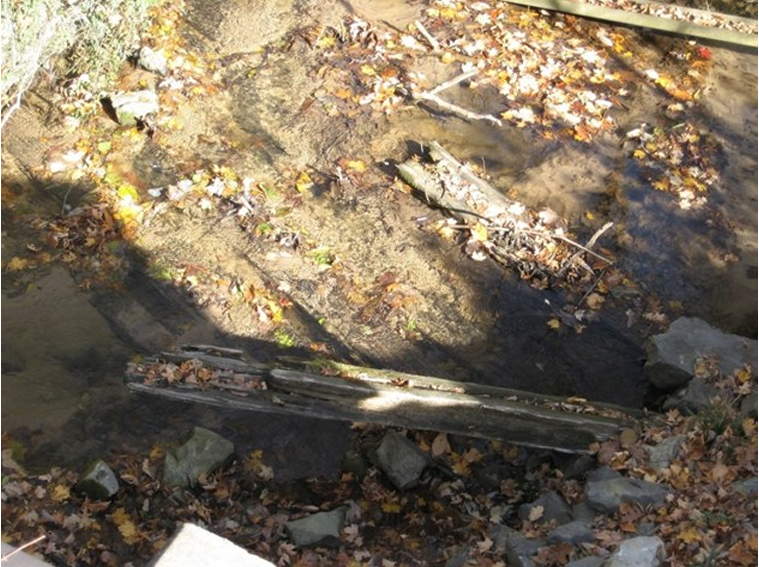
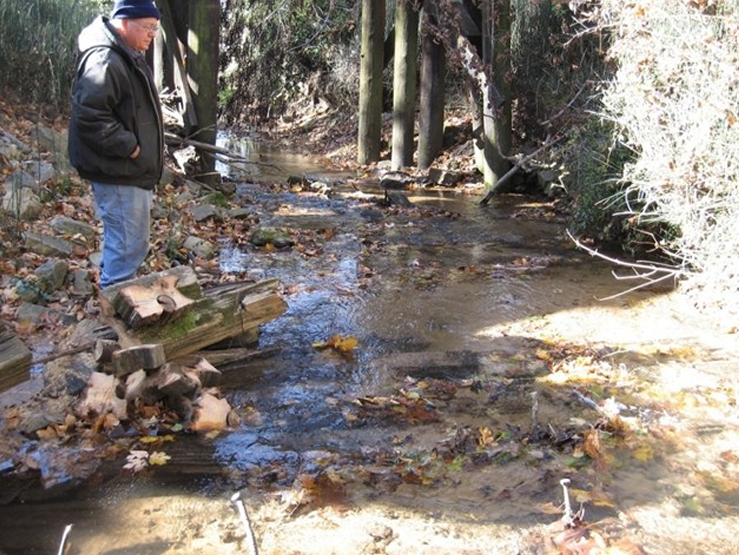
Luckily, November 12 turned out to be a beautiful day. My wife Jo and I left home around 8:30 a.m. and met Chuck at his house in less than 2 hours. We travelled to the farm of Darrel, the property owner. He escorted us out to the railroad trestle, which sits about 20 feet above a creek. Walking out on the trestle and looking down into the clear, shallow water, one can see timbers. These timbers are large, and their widths are not uniform. I knew right away that these timbers were not part of the railroad. I could see they were older than any of the railroad timbers in the area. We drove down to the creek where Darrel and I put on boots and waded through the water to the location of the timbers. We found the sidewall timbers buried in silt. There were large rocks in and around the creek bed. The rocks looked like ones used to protect a canal structure. I came to the conclusion that this was the remains of a Wabash & Erie Canal culvert . The setting for this structure is on the edge of the bluffs of the West Fork of the White River in Daviess County.
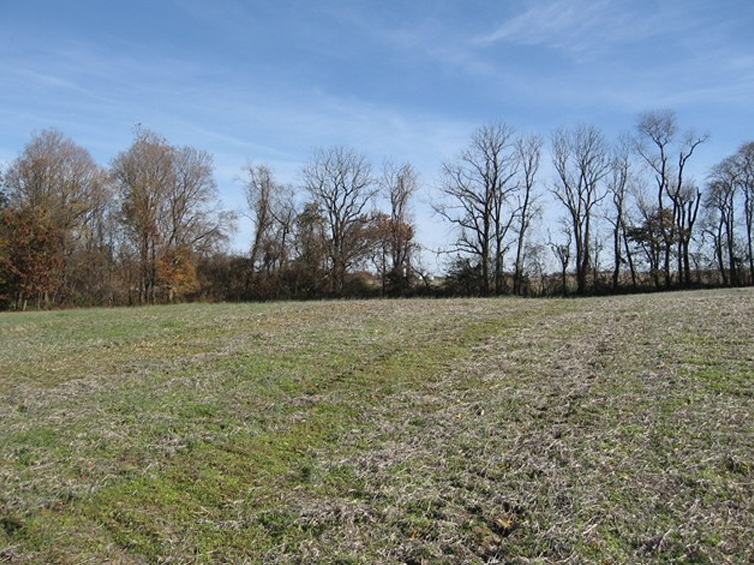
As we were finishing examination of the remains of the culvert, Darrel asked if we would like to see the site of a canal-related cemetery. Our answer was, “Sure.” We drove down the road and eventually to a large field made up of small rolling mounds. This area had been a mass grave for Irish canal workers who died in a cholera outbreak probably in the early 1850s. The site has been investigated and documented by the Indiana Department of Natural Resources. Respect for private property prevents me from revealing the precise location of the culvert and cemetery.
As we travelled the countryside around Petersburg, we were amazed at the number of solar panels and the amount of land taken up by them. It seemed they were everywhere with more under construction. At lunch time, the restaurants were full of construction workers.
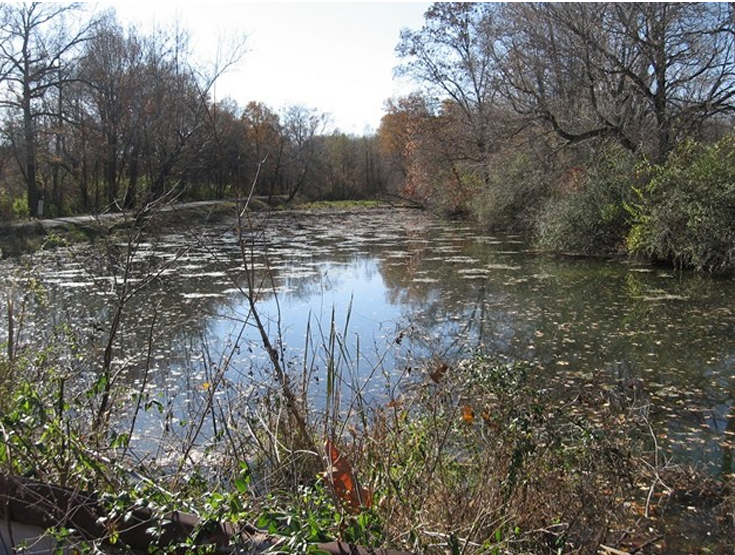
We ate lunch in Petersburg and then drove south on Highway 57. Turning off the highway, we were in Willisville. There is not much at Willisville except a few houses and a section of the Wabash & Erie Canal with water still in it. On one edge of this section runs a county road on what was once the towpath. Part of the other side of this watered section has a steep cut bank. David Kurvach of CSI says the water in this area can be “quite deep.” It is towards the north end of the Patoka Deep Cut.
Chuck suggested we visit the Pike County Public Library because it contained some canal-related items. The facility itself is fairly new. At the library, the Special Collections Librarian and Chuck pointed out that one wall and part of the ceiling in one room are covered with wood planking, which was donated by the Rudolph family. It was cut from the timbers of a Wabash & Erie Canal structure that was on their property. This display made a very attractive background for this part of the library. There is a plaque on the wall stating the following: “This paneling was cut from timber used in the old Wabash-Erie Canal. The original planks were cut from oak and poplar timbers, which were used in constructing aqueducts that spanned rivers and streams. Austin and Una Rudolph donated the timbers and had them cut into paneling.”
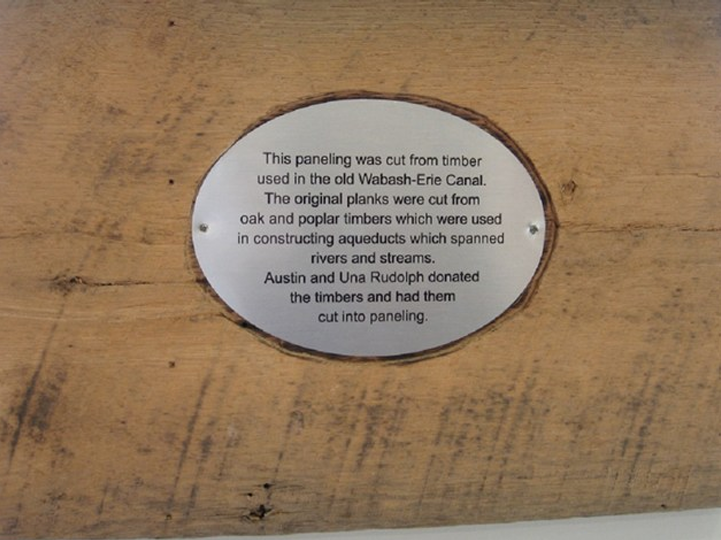
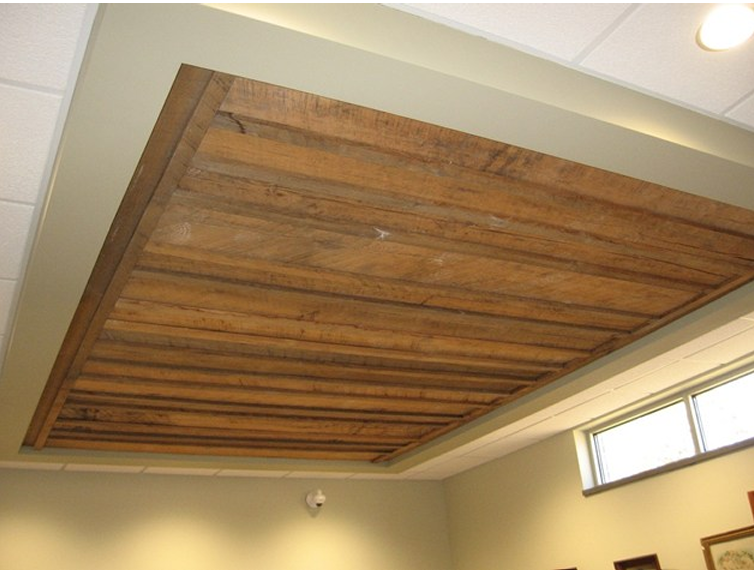
Plaque in Pike County Public Library explaining wall and ceiling planks
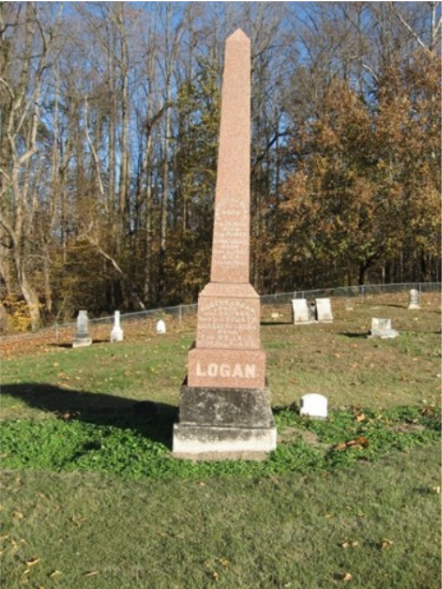
The Pike County Public Library contains some store ledgers of Robert Logan. Logan lived in Highbanks, Pike County, Indiana. He was the contractor for stone locks #46 and #47 in Vigo County near present day Riley, then Lockport. Lock #47 was called “the best lock in the State of Indiana” by resident canal engineer William J. Ball.
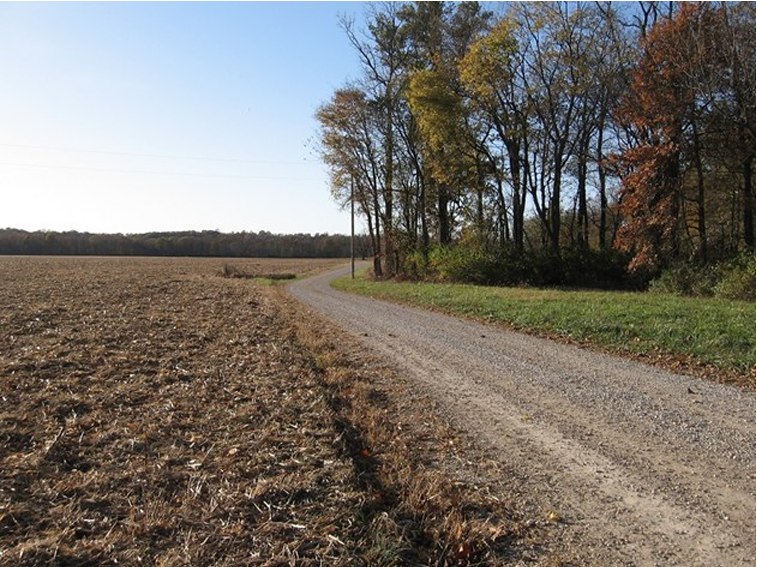
We left the library and travelled east to the Logan Cemetery. The cemetery is very well maintained and not hard to find. It was easy to find Robert Logan’s grave as it is a large tombstone in a prominent location. It should have been a short drive down the road to what was once the town of Highbanks, but the county no longer maintains that short section of road. We had to go back to Highway 356 and take another county road to reach the site. Luckily Chuck knew the location well because there is nothing left of the community. The buildings have been removed and what was once Highbanks is now farm land.
We didn’t go to the Pike County Historical Museum on this day but had visited it previously. If you are in the Petersburg area, the museum is worth seeing. Among its collection of items is a small stove that was said to be from a canal boat.
Heading home late in the afternoon, we stopped in Vincennes to eat supper and fill the gas tank. The weather, canal sites, and meeting nice people who were interested in canals and willing to share their knowledge made for a really great day.